
Collagen is the most abundant protein in your body, and it helps build muscle and strengthen your bones, giving you structure and support. Your body makes collagen from the foods you eat. As you get older, your ability to produce collagen declines.
Along with core and balance exercises such as yoga and Pilates, collagen can help prevent a devastating fall. Additionally, collagen can preserve and possibly build bones, too.
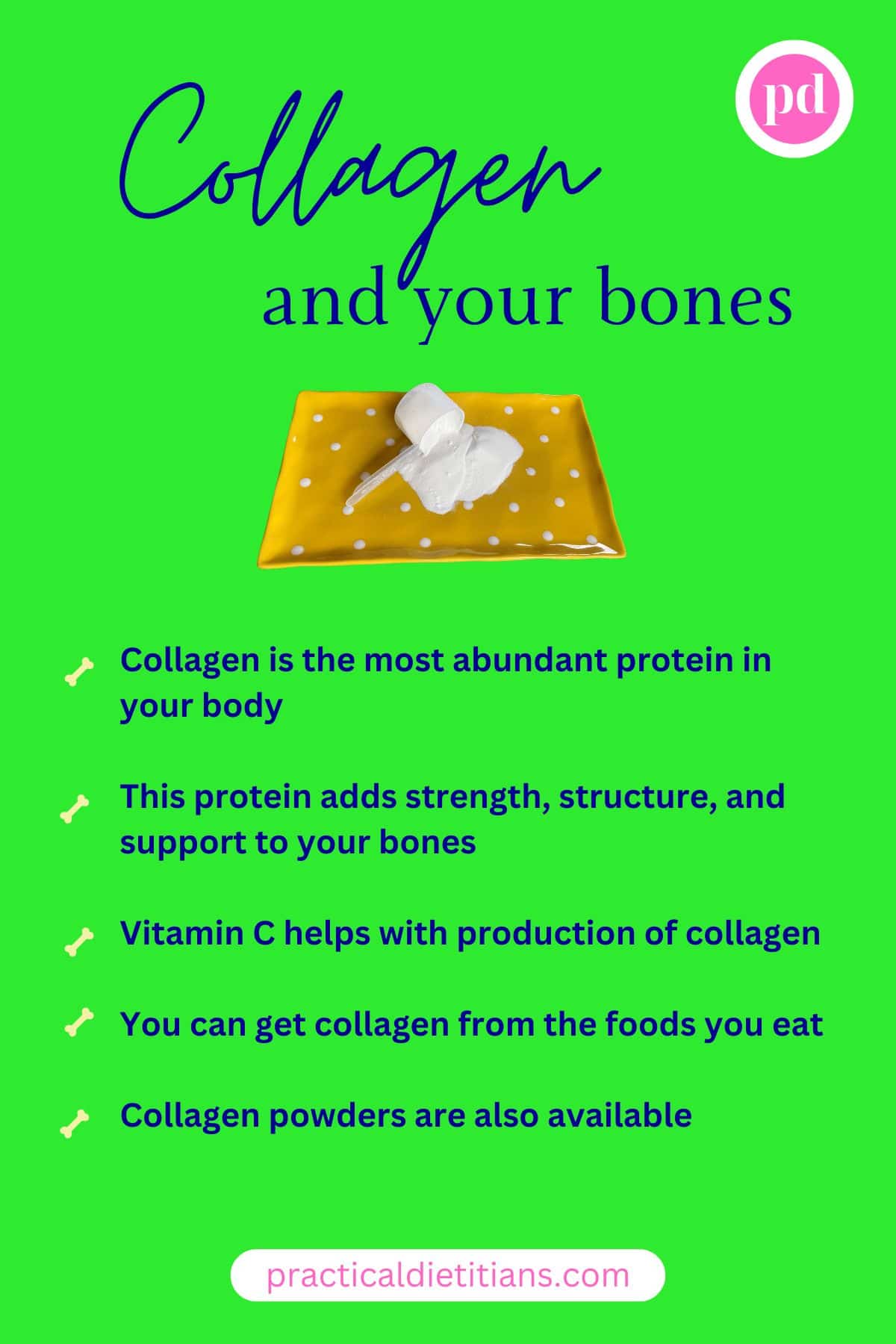
What are some ways you can get collagen?
Eating foods with vitamin C helps your body produce collagen. Broccoli, potatoes, greens, kiwifruit, citrus fruits, and tomatoes are just a few sources of vitamin C that lend a hand toward collagen development to aid in bone strength.
Animal products such as beef, chicken, pork, homemade broths made from these foods, and fish, like sardines and salmon, contain collagen. Additionally, foods rich in protein help your body build collagen.
Where do collagen powders fit in?
Some studies show that there is potential for collagen powder to help with bone building, but further research is needed.
We reviewed a study of 131 postmenopausal women who were losing bone mass due to age. They were placed in two groups: a treatment group containing collagen peptides (5g) taken daily for one year and a placebo group.
The women in the treatment group increased bone mineral density at the lumbar spine (lower back) and femoral neck (small area of the upper thigh bone). This is one of the most frequent locations where a hip fracture occurs.
In this study, the treatment group had lab values that indicated greater bone formation and reduced bone breakdown.
A follow-up study continued with 31 of the original 131 subjects who agreed to participate for four more years. This research used FORTIBONE, the same collagen peptide supplement used in the first study.
Significant increases in the bone mineral density of the spine and the small area of the upper thigh bone were found in the collagen treatment group compared to the placebo group. No fractures occurred in either group during the 4-year follow-up.
Interestingly, neither group experienced a bone break in the follow-up study. Did they change anything else? Were they exercising? Did they change any of the other foods they ate? Were they being more careful?
To answer those questions, all participants were provided nutritional education and were taught the benefits of regular physical activity. They were also encouraged to take calcium and vitamin D supplements, although none were prescribed.
Dietary intake and physical activity were monitored over the course of the study. The researchers noticed that both groups increased physical activity, but not significantly. Calcium and vitamin D supplement intake stayed about the same in both groups. Calcium intake was near the RDA, but Vitamin D intake was far below the RDA.
How do collagen powders work?
Collagen powders are broken down into the amino acids that make them up through normal digestion. Your body will break down any protein you eat into amino acids.
The amino acids become absorbed into your bloodstream. When your body is ready to build collagen, it has the necessary ingredients to combine to benefit your bones.
So why do we take collagen?
So why do we take collagen if any protein we eat will break down into amino acids? Why not consume any protein food? Wouldn’t that protein food you eat build the collagen you need?
Still, studies show people benefit from taking collagen, so it seems it must have something that helps your body build even more collagen versus eating beans, eggs, or a steak. Or, would eating more beans, eggs, or steak have given women the same results as the collagen?
Collagen powders show promise in helping postmenopausal women build bones. We also haven’t noted any harm from taking these supplements, from the studies we reviewed or personal accounts.
What collagen brands are recommended and why?
We have experience with two powders. They are Orgain Collagen Peptides +Probiotics and Vital Proteins Collagen Peptides. Stephanie adds one scoop (which comes with the product) of Orgain powder to her 16-ounce smoothie, which she enjoys twice weekly.
This product does not indicate how frequently it should be used. However, the Vital Proteins powder, which provides the same amount of collagen, suggests taking 1-2 scoops daily.
Someone we know who uses the Orgain powder reported that it helped improve bowel movements. This could be due to the probiotics in the product because those same results did not occur with the Vital Proteins product. Results may not be the same for everyone.
Summary
Collagen supplement powders may help you with bone preservation and bone building, but more research is needed. Continue to exercise and nourish your body with various foods that include protein and vitamin C.
To learn more about collagen, we invite you to visit our nutrition colleague’s blog Collagen: 3 or 4 ways it keeps a body together (soul not included) – Food Hall by Jani.

Stephanie Turkel is a registered dietitian nutritionist based in Texas. She has 30 plus years of experience in the nutrition field. She now takes her gained knowledge and shares it with you to explain science articles into easy-to-understand information.

Grace Rivers, RDN, CDCES
Grace is a registered dietitian nutritionist residing in Texas. She has over 30 years of experience in nutrition. Grace loves translating science articles into easy-to-understand information for you.