
Getting enough vitamin A, but not too much, protects your bones. Those whose blood values were too low in one study were at an increased risk of breaking a bone. And those whose blood values of vitamin A were too high were also at risk of a fracture.
Another study found that too much supplemental vitamin A intake was associated with a decrease in bone mineral density.
Higher intakes of carotenoids from food were associated with fewer hip fractures.
Women fall short of vitamin A
Vitamin A comes from animal and plant sources, but women still don’t consume enough. Animal sources provide active vitamin A, and plant sources provide the precursor to vitamin A, mainly in the form of beta-carotene.
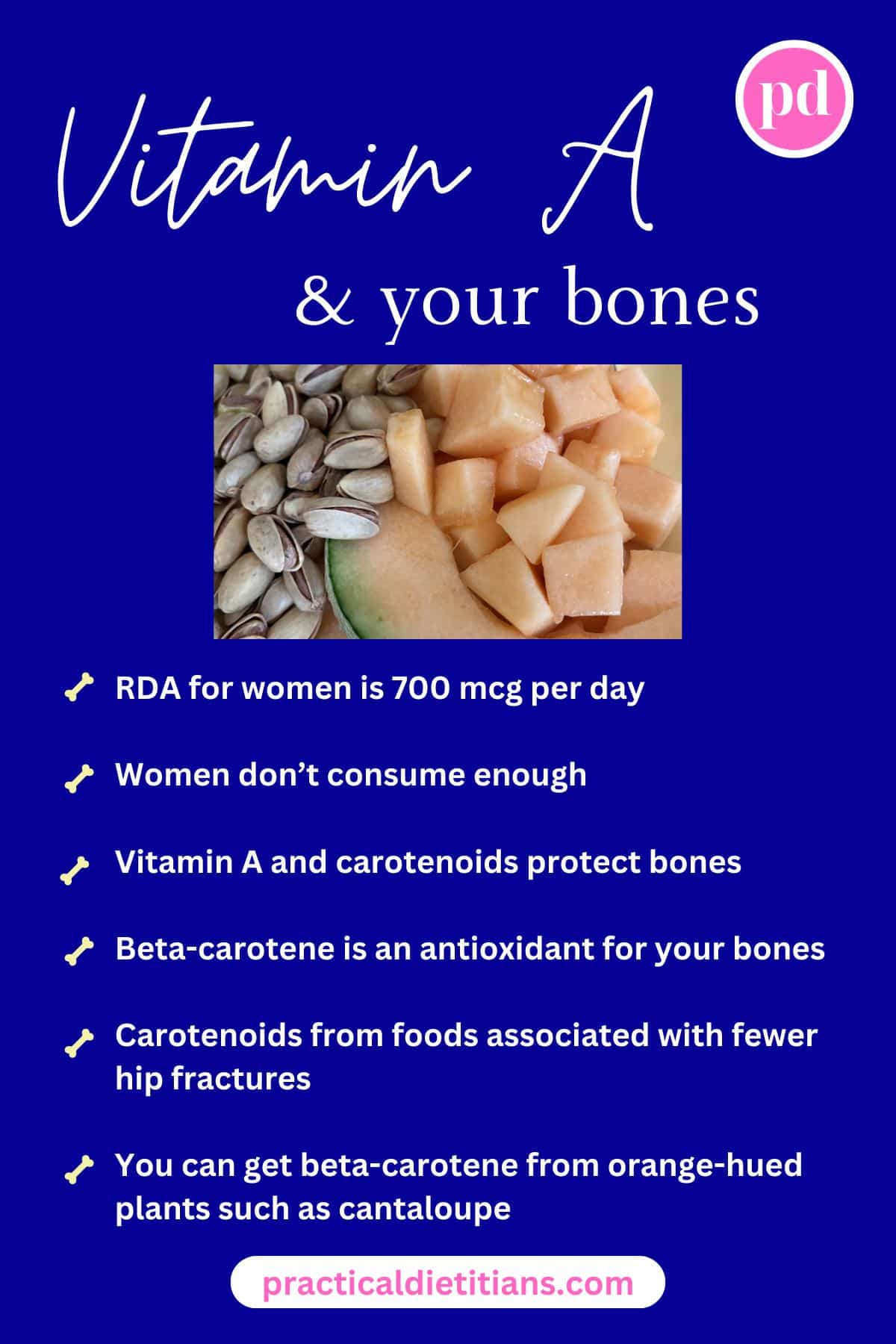
Having food with the precursor is ideal because your body activates this vitamin as needed, helping to regulate the amount.
Not only is vitamin A status helpful for your bones, but the precursor beta-carotene by itself is also protective, because it acts as an antioxidant for your bones.
The primary precursor (forerunner or provitamin) for vitamin A is beta-carotene, a carotenoid, which your body converts to the active form as needed to protect your bones, in addition to many other functions.
You will not get too much beta-carotene from food, but you can get too much vitamin A if you take supplements containing the active form or eat too much liver. The safe tolerable upper intake level of vitamin A is 3,000 mcg each day.
Beef liver provides 6,582 mcg in 3 ounces. So, if you eat liver, keep it to three 3-ounce servings or less per week.
Can women get too much vitamin A?
Excesses of vitamin A from dietary sources are extremely rare. The precursor to vitamin A, beta-carotene, has protective effects on your bones, and there is no harm in getting too much of this from plant food.
Carotenoids for bone health
Beta-carotene and other carotenoids positively affect bones because they are antioxidant phytochemicals. Beta-cryptoxanthin stimulates the formation of new bone while inhibiting the breakdown of bone.
Lycopene, beta-carotene, and beta-cryptoxanthin help preserve bone mineral density in postmenopausal women. Those who had higher intakes of these carotenoids from their food had fewer thighbone fractures.
Lycopene (not a vitamin A precursor) also appears to protect against oxidative stress and bone breakdown in postmenopausal women. Canned tomatoes are especially rich in lycopene.
How much women need
The RDA of vitamin A for women is 700 mcg per day. The latest information on average intake for women aged 50 to 59 is 548 mcg per day. Interestingly, the average daily intake for this vitamin continues to rise with age to 619 mcg for those 70 and older.
Sources of vitamin A
Animal sources
- Beef liver
Plant sources
- Carrots
- Apricots
- Cantaloupe
- Sweet Potatoes
- Butternut squash
How to get enough
- Savor liver and onions
- Enjoy cantaloupe with pistachios
- Crunch on sweet red peppers and a boiled egg
Conclusion
Vitamin A and carotenoids (some of which convert to vitamin A) are bone protective to a point. Foods sources, not supplements, both plant and animal, are recommended to ensure that you get an optimal amount for your bones.
A more in-depth look into this and other nutrients for bone health can be found in our book, Eating for Better Bones.

Stephanie Turkel is a registered dietitian nutritionist based in Texas. She has 30 plus years of experience in the nutrition field. She now takes her gained knowledge and shares it with you to explain science articles into easy-to-understand information.

Grace Rivers, RDN, CDCES
Grace is a registered dietitian nutritionist residing in Texas. She has over 30 years of experience in nutrition. Grace loves translating science articles into easy-to-understand information for you.