
B vitamins help your body process and use the macronutrients carbohydrates, proteins, and fats. Studies have shown that three of these vitamins are associated with better bone density in women who have healthy blood levels.
We delve into the specifics of vitamins B6, B9, and B12 and how to include them in your eating pattern. More detailed information on these and other nutrients to keep your bones strong can be found in our book, Eating for Better Bones.
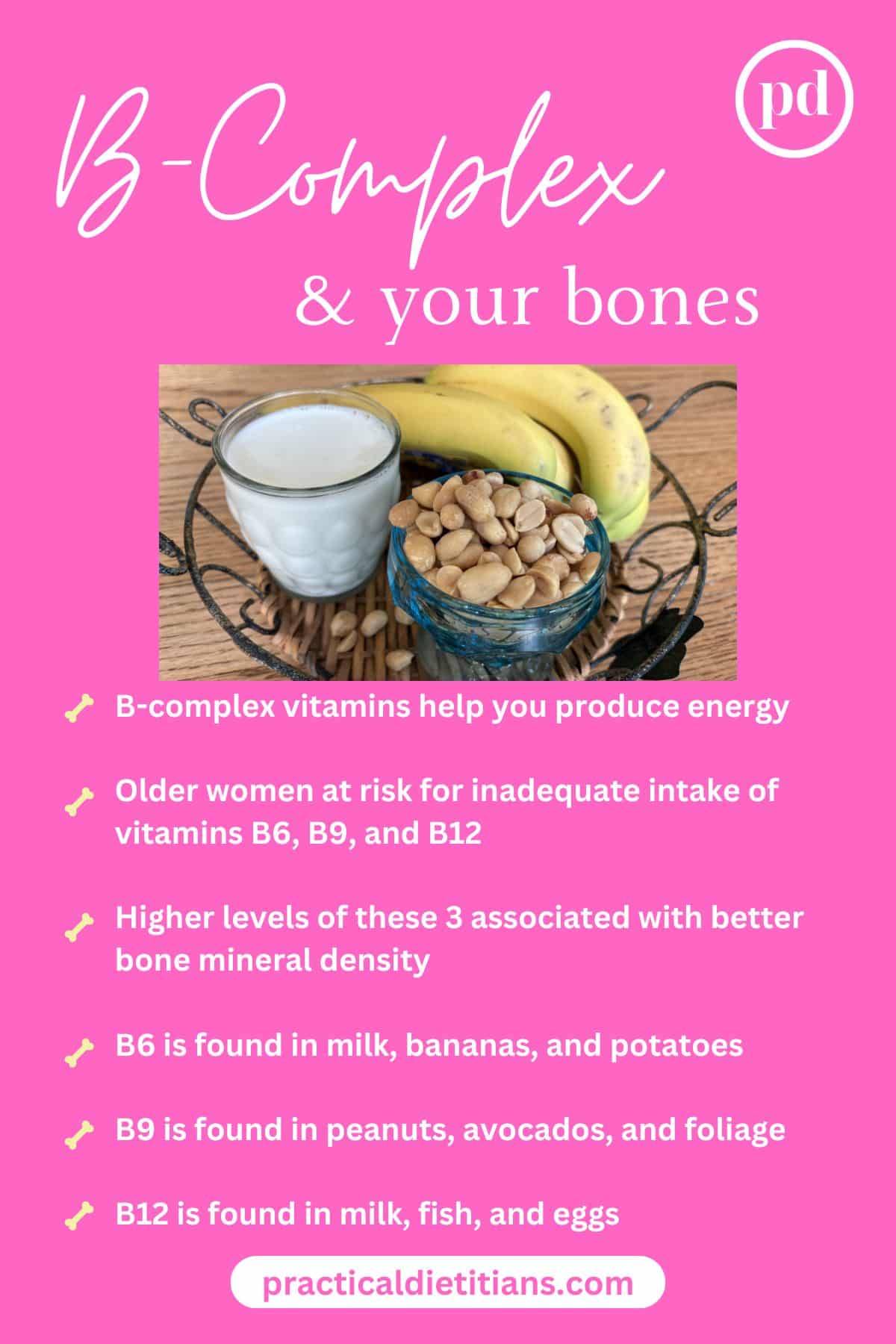
Vitamin B6 (pyridoxine)
Higher intakes and higher blood levels of B6 are associated with better bone mineral density in your spine and the top of your thigh bone. A deficiency of B6 can lead to weaker bones because it impacts your body’s ability to produce collagen, which is necessary for stronger bones.
The RDA for vitamin B6 in women older than 50 is 1.5 mg per day. The average intake for women aged 50 to 59 is 1.44 mg each day. This amount drops with age to 1.37 mg per day in women 70 and older.
Sources of B6
How to get enough
- Crunch on celery and hummus
- Snack on mixed nuts and banana slices
- Enjoy a baked potato with Greek yogurt
Vitamin B9 (folate)
The bone mineral density was greater in Asian postmenopausal women who had higher levels of folate in their blood in a study by Kalimeri and colleagues.
People with higher folate intake from food had better bone density in a more recent study. This was especially true for those over 80 and who were white and non-Hispanic. The researchers recommended 528–569 mcg of folate daily for postmenopausal women, which is higher than the RDA and the average intake.
The RDA for folate in women is 400 mcg per day and the intake is below the RDA. The average dietary folate equivalent intake for women aged 50 to 59 is 374 mcg each day. The average intake drops to 354 for those 60 and older.
Those with a higher intake than the RDA were observed to have better bone-protective effects when observed by Zheng and fellow researchers.
Sources of folate
How to get enough
- Add beans to your pasta salad
- Add spinach or romaine lettuce to your meal
- Enjoy a small orange with a handful of peanuts
Vitamin B12 (cobalamin)
The top of the thigh bone was stronger in Asian postmenopausal women who had higher blood levels of vitamin B12 in the study referenced in the folate section above.
The RDA for vitamin B12 is 2.4 mcg per day. It’s easy to get if you include dairy and other animal foods in your diet. Vegetarians may be at risk of not getting enough if the meals are not planned properly.
Vegans will typically need a supplement since B12 comes from animal foods.
Anything limiting absorption will impact your ability to get the B12 you need. Those who have had gastric surgery may be at risk.
Absorption of B12 may decline with age, because B12 must combine with intrinsic factor (produced in the stomach) for it to be absorbed in the last part of the small intestine. Aging adults tend to have lower stomach acid, which inhibits this process.
If B12 status falls too low, it can result in pernicious anemia, which is difficult to detect and characterized by nervous system impairments and low blood cell counts. B12 deficiency takes years to develop and be recognized.
You may need to eat a little more, or your physician may prescribe a supplement.
The average intake for women aged 50 to 59 is 3.25 mcg per day. For women aged 60 to 69, it increases to 4.01 mcg, and for those 70 and over, the average intake drops to 3.23 mcg per day.
Sources of B12
- Fortified nutritional yeast
How to get enough
- Eat a cheese omelet for breakfast
- Bake a ground beef casserole for dinner
- Sprinkle nutritional yeast on cooked beans or a salad
Conclusion
The B-complex family of vitamins works hard to keep your bones strong. Three B vitamins have been studied and shown to be associated with better bone density in postmenopausal women who have higher blood levels. Focusing on foods rich in these and other key nutrients will contribute to good bone health. Learn more in our book, Eating for Better Bones.
Stephanie Turkel is a registered dietitian nutritionist based in Texas. She has 30 plus years of experience in the nutrition field. She now takes her gained knowledge and shares it with you to explain science articles into easy-to-understand information.
Grace Rivers, RDN, CDCES
Grace is a registered dietitian nutritionist residing in Texas. She has over 30 years of experience in nutrition. Grace loves translating science articles into easy-to-understand information for you.