
Support physical activity by properly fueling your body every day. Bones depend on body movement to preserve their density, but they must be nourished to support your moves to keep them strong.
Whether you are playing tennis, walking your dog, or gardening, vital nutrients keep you fueled for your efforts. Even for the activities you do daily, such as brushing your teeth, making your bed, or preparing a meal, water, carbs, protein, and fat are necessary for you to be successful.
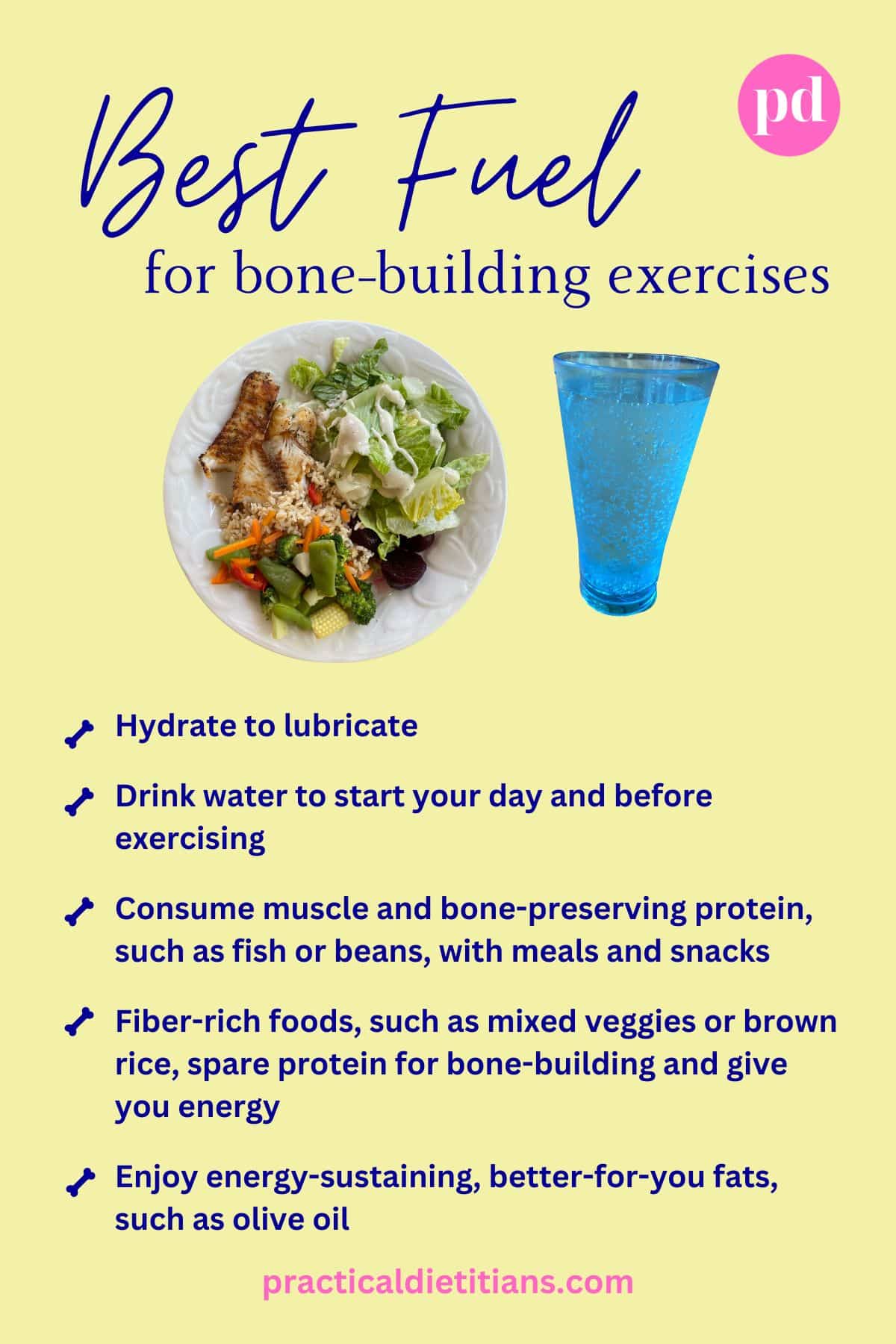
We notice that women will cut back on calories, complain of being tired, and then choose an energy drink. If this is you, you don’t need an energy drink; rather, eating regular, everyday food will provide nutrients that best serve your bones.
Hydrating for exercise
Even if you are not going to be exercising, starting your day with a glass of water gets you on the right track. Water is the most important nutrient for supporting bone-preserving physical activity before, during, and after exercise.
Your blood will not flow properly without water, and you may be constipated. Even when you are mildly dehydrated, you don’t feel like doing anything.
Cardiorespiratory exercise requires the most water because you sweat. Drink 1 to 3 cups of water before this type of physical activity. However, no matter the exercise, whether it’s cardio, strength, or flexibility training, sip on water during the activity. Afterward, continue drinking water to replenish fluid losses.
Starting your day with a glass of water can get you on the right track. Many liquids and some foods can contribute to your water intake.
- Tea
- Coffee
- Fruit such as melon
- Calorie-free flavored drinks
Fruits may give you the electrolytes you need. Sports drinks such as Gatorade can be helpful if the environment is excessively hot, or you are performing cardio moves for longer than an hour in duration and are sweating more than usual.
Bone and muscle building blocks
Protein-rich foods provide amino acids for bone and muscle building. Protein functions optimally when enough fiber-rich foods and fat are on board. This primary nutrient replenishes all cells throughout the body and is important for proper immune function.
Protein can easily be obtained from everyday animal and plant foods.
- Fish
- Eggs
- Poultry
- Red meat
- Nuts & seeds
- Beans & lentils
- Milk, yogurt, & cheese
- Tofu, tempeh, & soymilk
Fiber-rich foods
Eating enough fiber-rich foods allows protein to be used for its main purpose of building bones and muscles. When consumed consistently throughout the day, they give you the energy needed to sustain your usual activities. Any additional physical activity, whether it’s an hour-long hike, gardening for 30 minutes, or vacuuming, may need additional fiber-rich food.
Fiber-rich foods providing energy include
- Fruit
- Soymilk
- Whole grains
- Beans & lentils
Energy-sustaining foods
Foods containing fat provide you with energy to fuel your body throughout the day. Your heart and muscles depend greatly on fat for fuel, even when you are sleeping or watching TV. As with other nutrients, you want to consume better-for-you fats, such as
- Fatty fish
- Avocados
- Canola oil
- Nuts & seeds
- Olives, olive oil
Fueling before and after exercise
Adequate fuel and liquid can get you through your bone-building workouts, but watch out for anything too heavy that would cause stomach upset.
A good rule of thumb is to eat a meal two or more hours before exercising. A nice practice is to schedule physical activity right before your lunch or dinner meal. But of course, we know that is not always possible.
If you will be working out in 1 to 2 hours, you might enjoy a slice of bread with peanut butter, which is a snack that includes protein, carbs, and fat.
If you are hungry and want to work out in less than an hour, you could have a small snack that digests easily, such as a small serving of fruit, low-fat milk, or yogurt. An example may be three Deglet dates or a toaster waffle with a cup of milk, or even a tablespoon of nut butter.
After working out, you need to replenish your energy stores, fluid, electrolytes, and repair your muscle tissue. You can have your regular meal if it is time, or enjoy a recovery snack such as chocolate milk, boiled egg with crackers, or a fruit smoothie. And remember to continue staying hydrated.
Conclusion
Nourish your bones and your whole body with water and foods that are rich in protein, fiber, and healthy-for-you fats. Doing so will contribute to effective workouts for your entire skeletal system. Learn more in our book, Eating for Better Bones, available on Amazon.

Stephanie Turkel is a registered dietitian nutritionist based in Texas. She has 30 plus years of experience in the nutrition field. She now takes her gained knowledge and shares it with you to explain science articles into easy-to-understand information.

Grace Rivers, RDN, CDCES
Grace is a registered dietitian nutritionist residing in Texas. She has over 30 years of experience in nutrition. Grace loves translating science articles into easy-to-understand information for you.